Sulfate
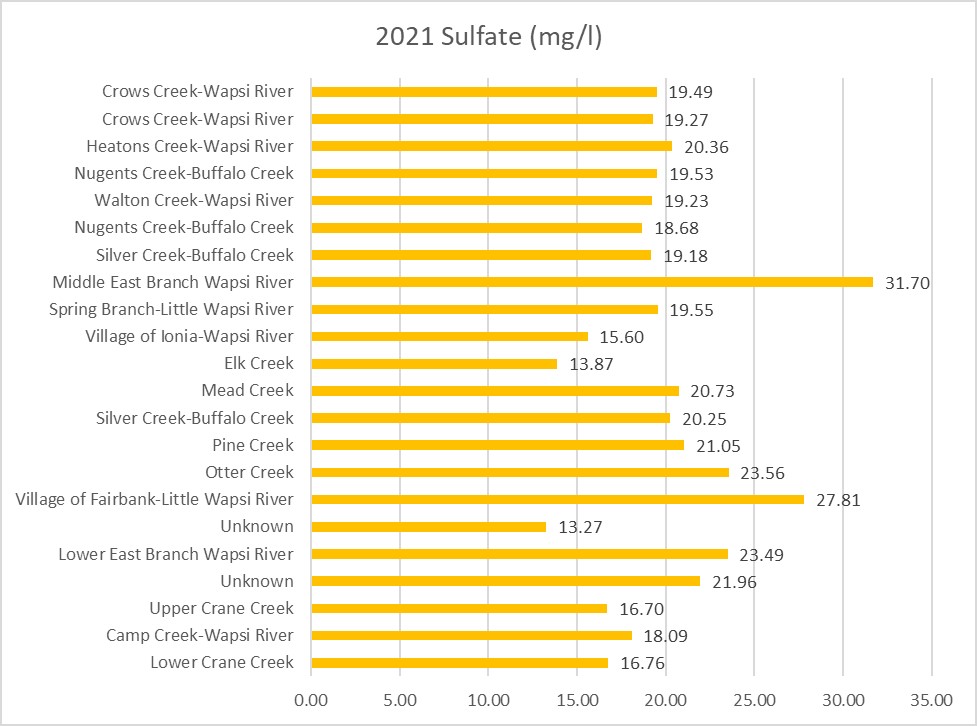
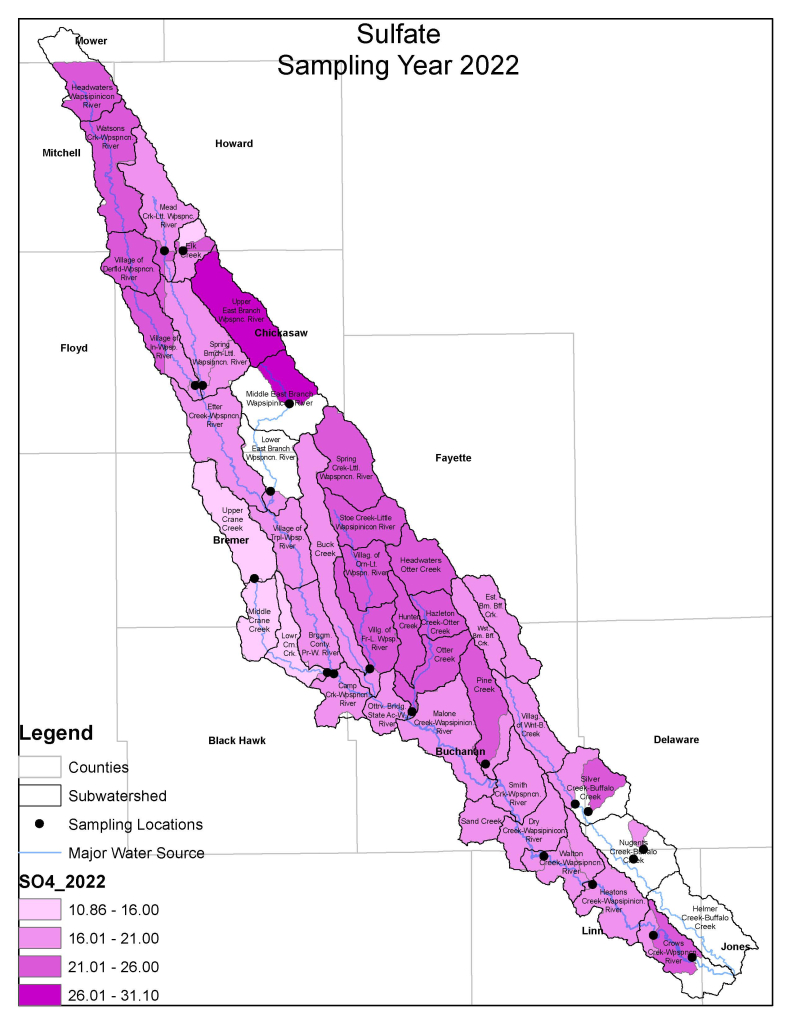
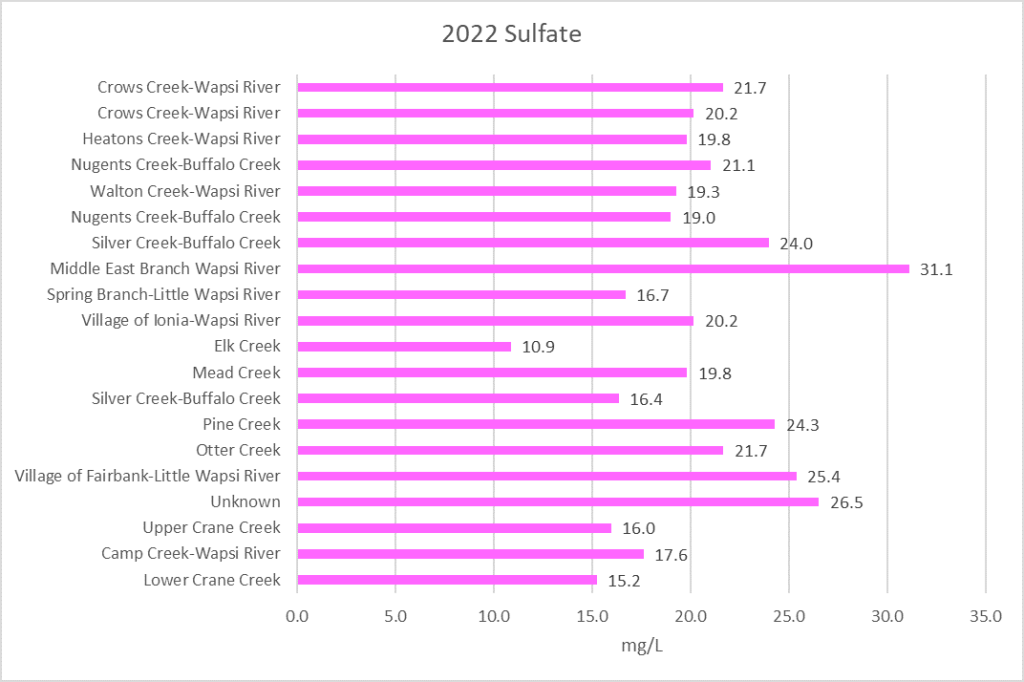
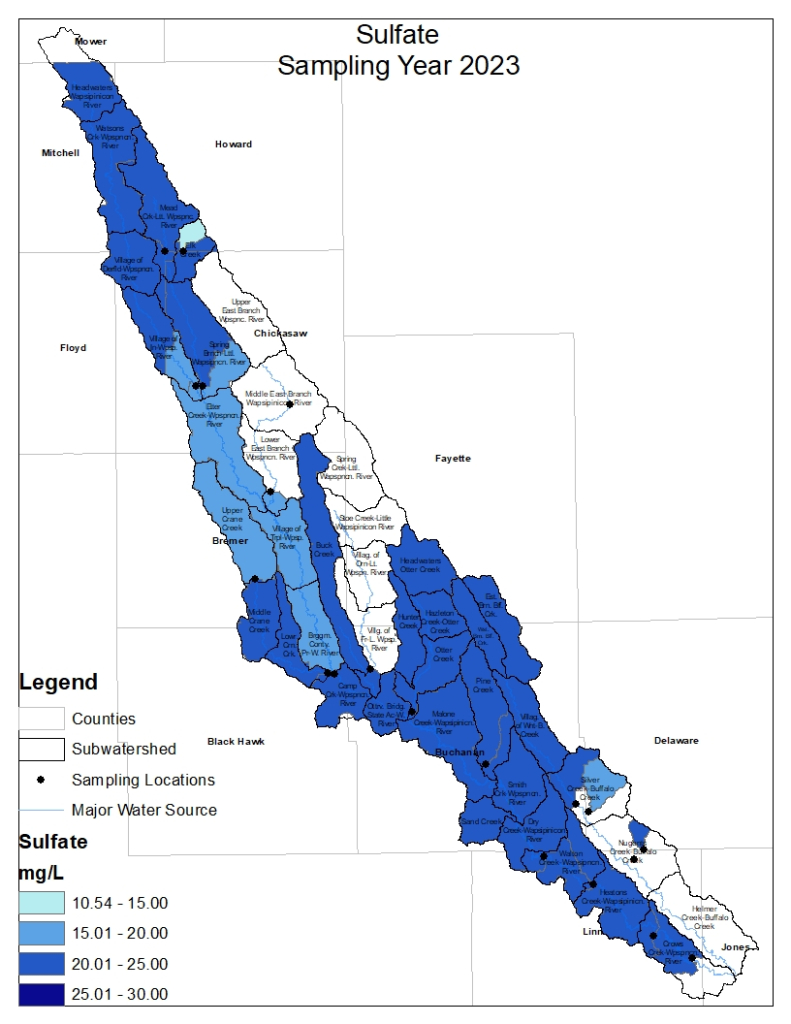
Sulfate can be naturally occurring in Iowa water bodies, or the result of municipal and industrial discharges. When naturally occurring, they are often the result of the breakdown of plant litter. Runoff from fertilized agricultural lands also contributes to the Upper Wapsipinicon River Watershed. Sulfur is an essential plant nutrient, too much or too little can be detrimental to aquatic organisms. Too much sulfate is detrimental due to its effect on the pH of waters in the UWRW. The Iowa DNR released, Water Quality Standards Review: Chloride, Sulfate and Total Dissolved Solids a study examining the effects of sulfate and chloride on aquatic ecosystems in Iowa.
Results by Sampling Year
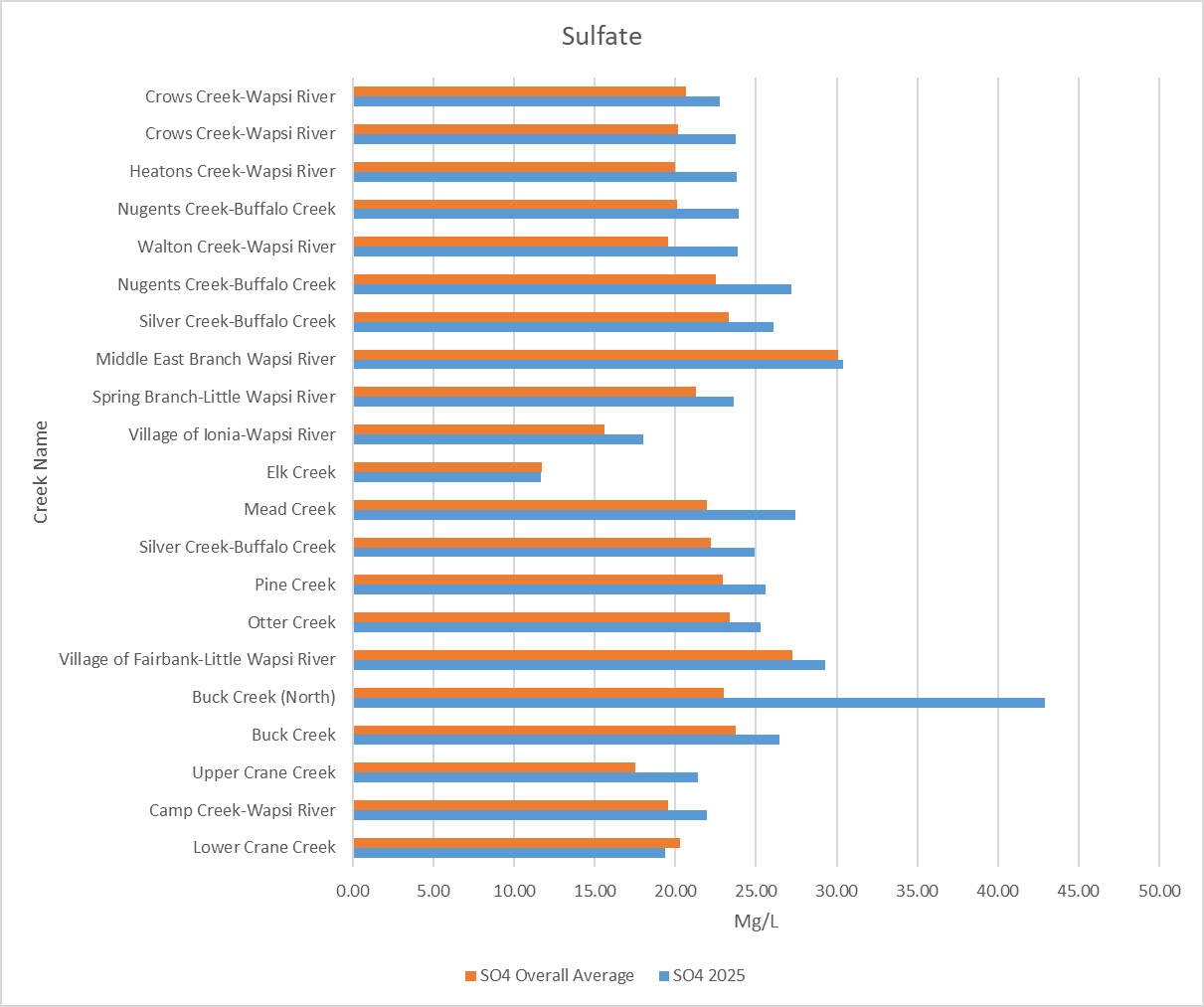
2025 Sampling Results
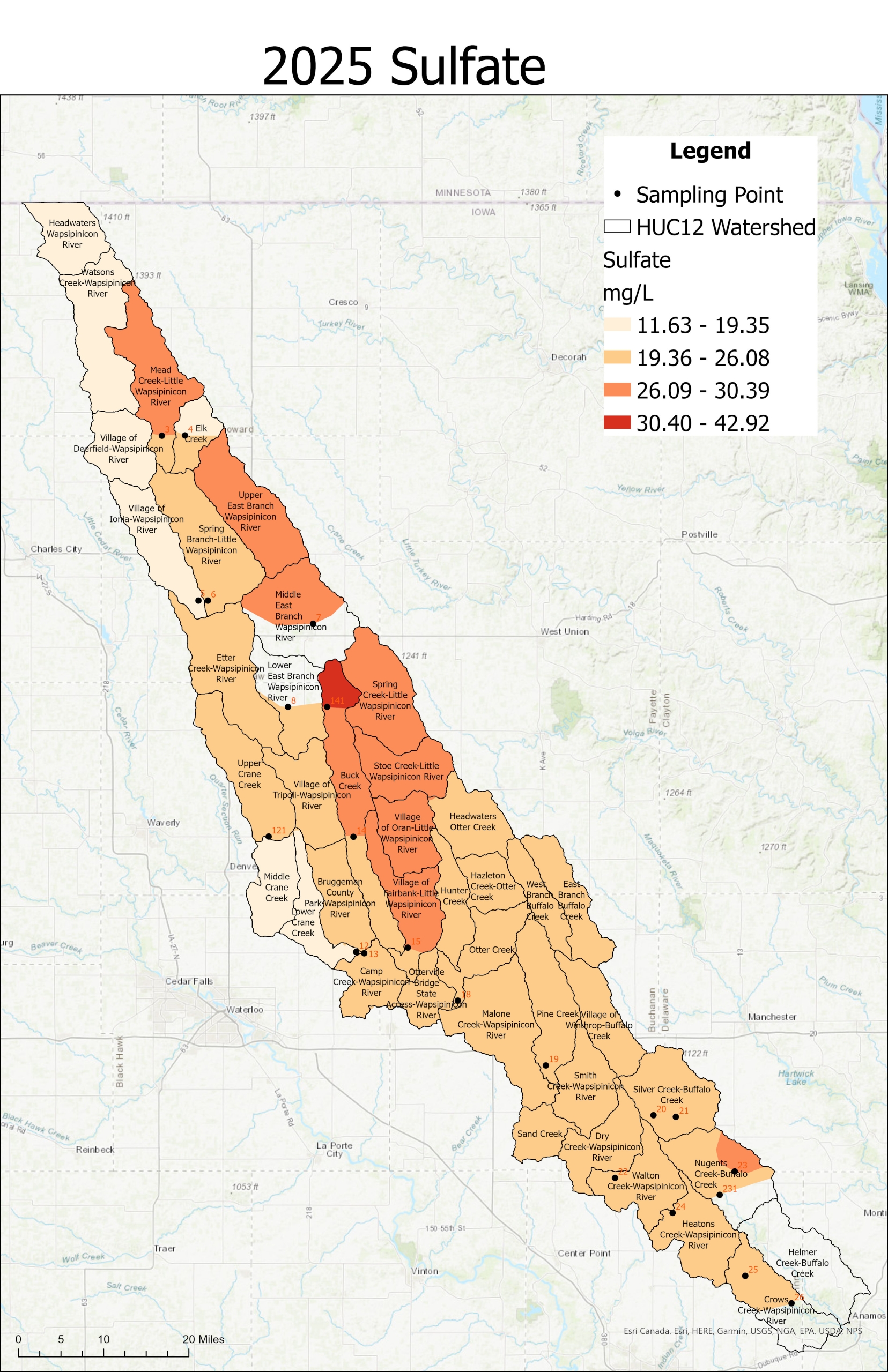
Cumulative Sampling Results: Sulfate
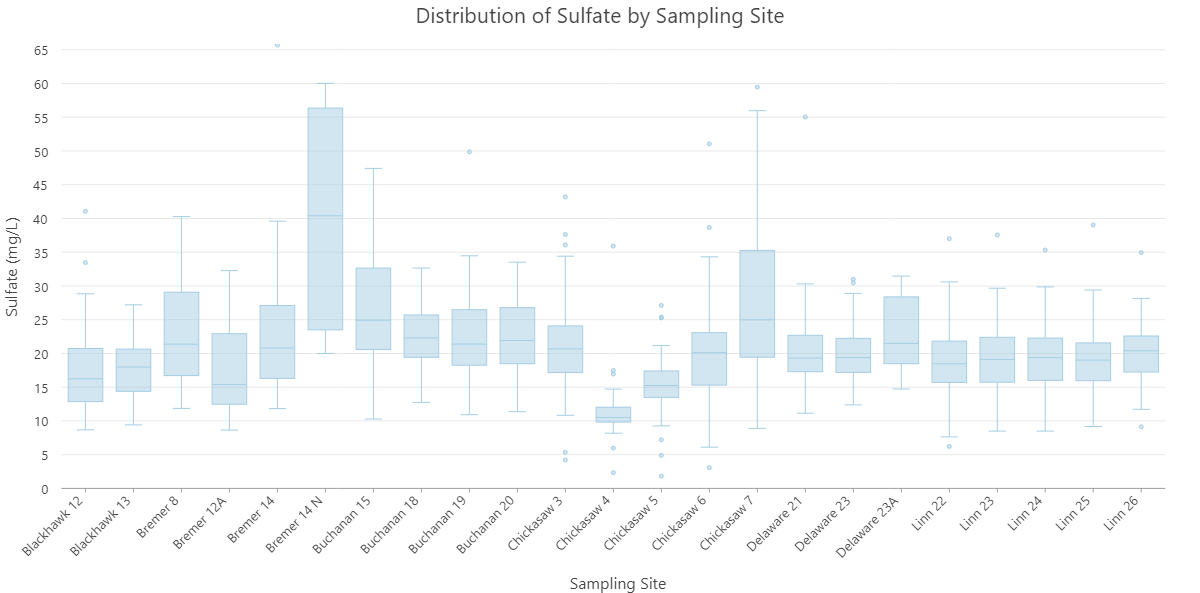
The above image shows all the Sulfate data collected from 2015 to current years by using a box and whisker chart. The horizontal line within each box represents the average value in the data, while the lines that extend from the box represent the variation in data. To learn more about how to read a box and whisker chart click here.
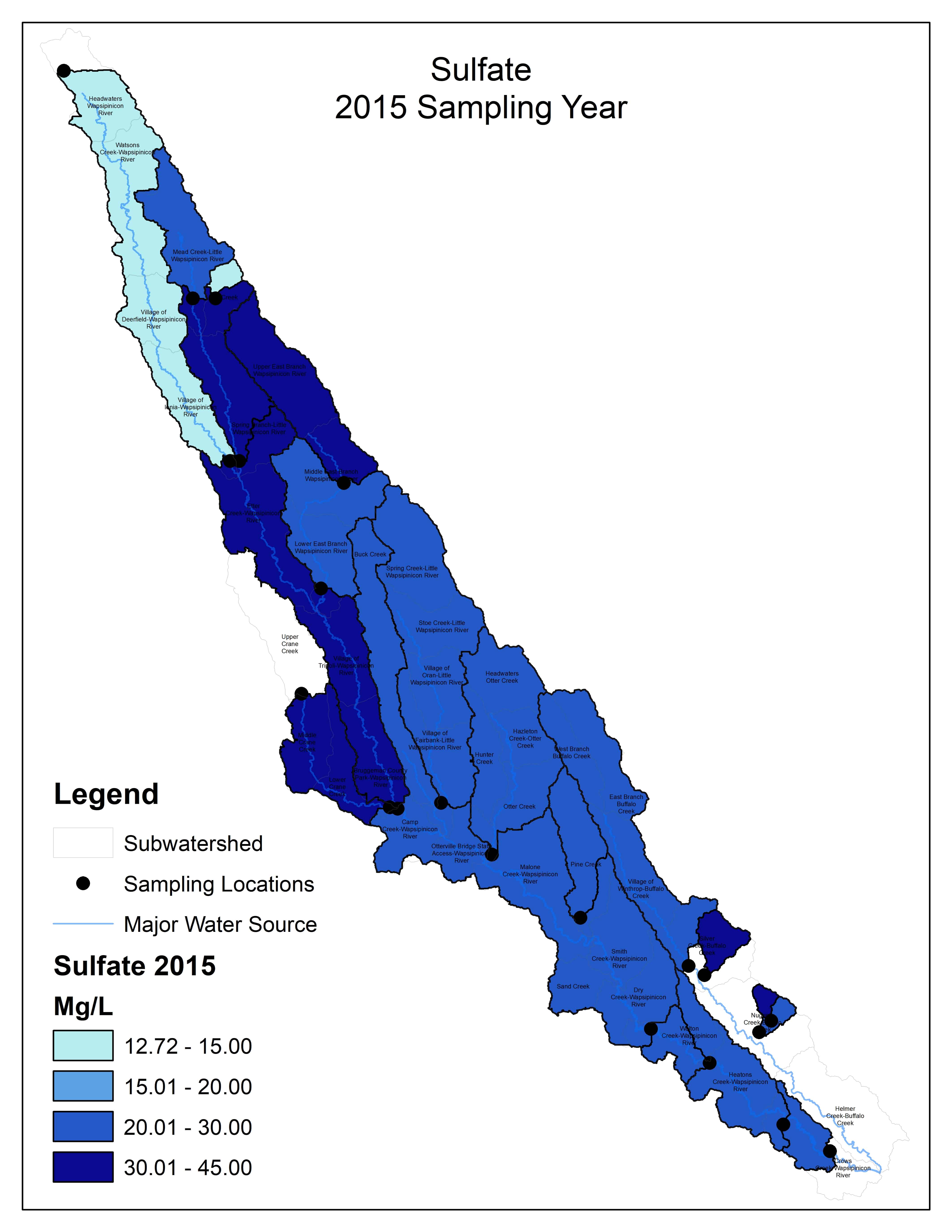
2015 Sulfate
(Mg/l)
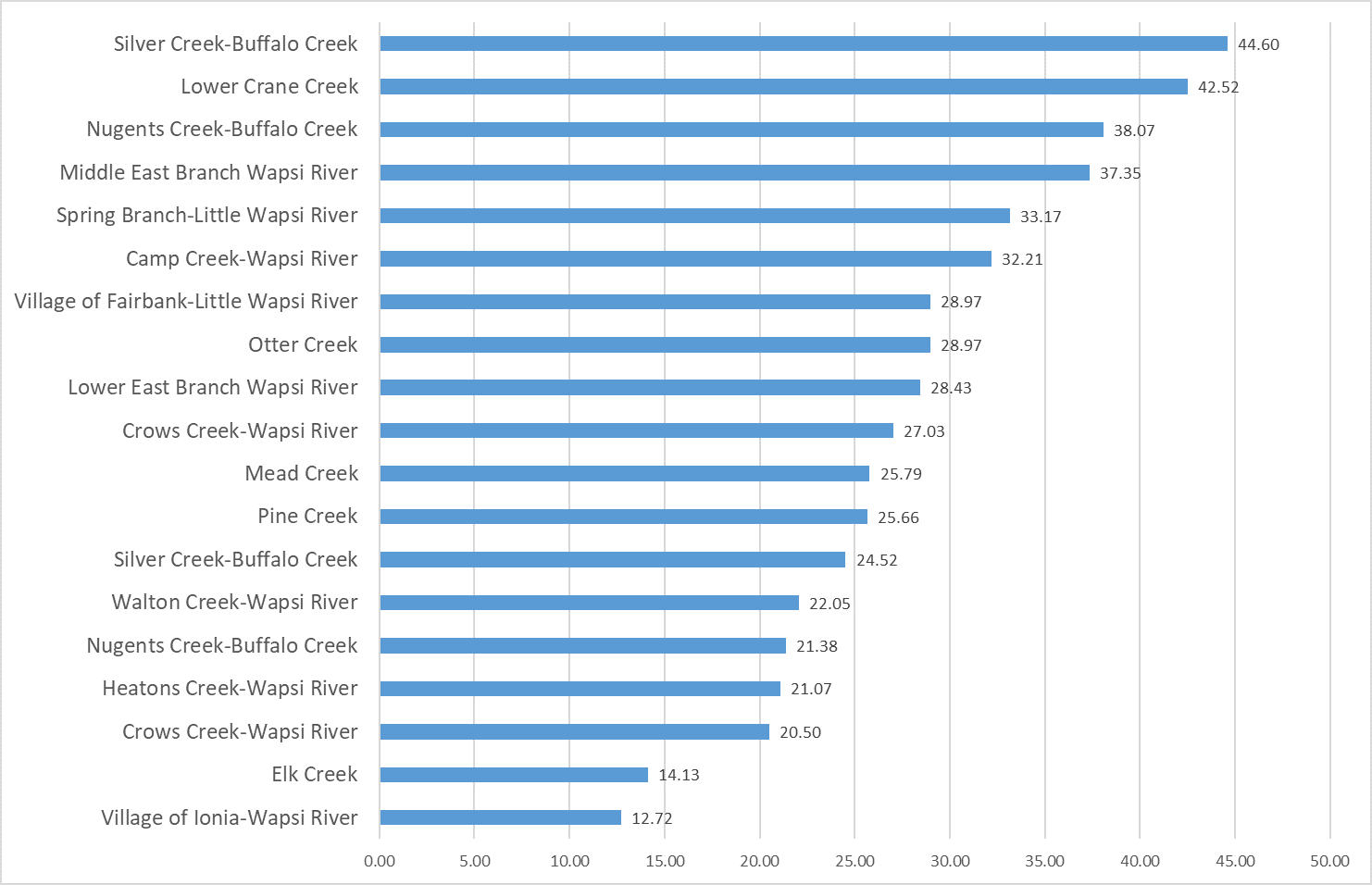
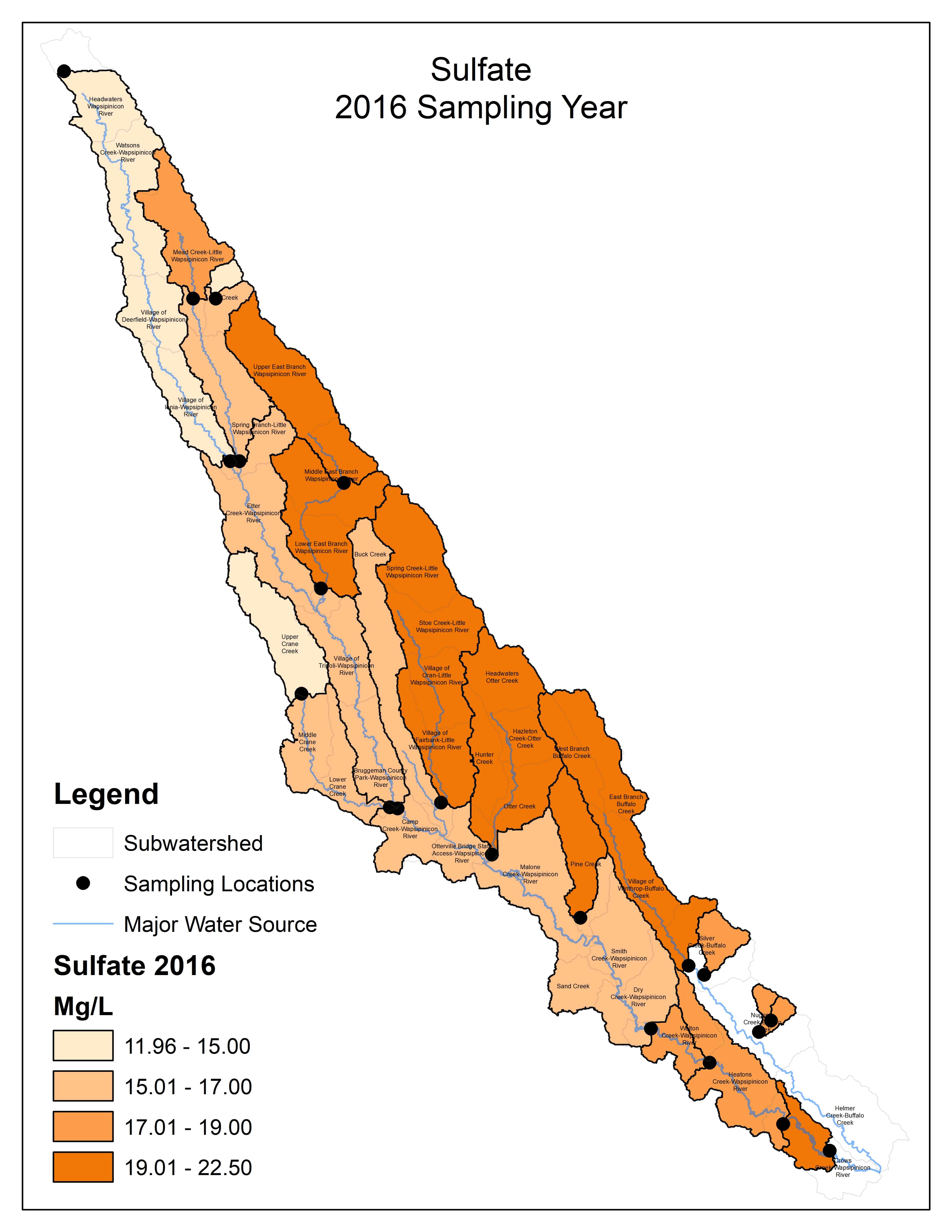
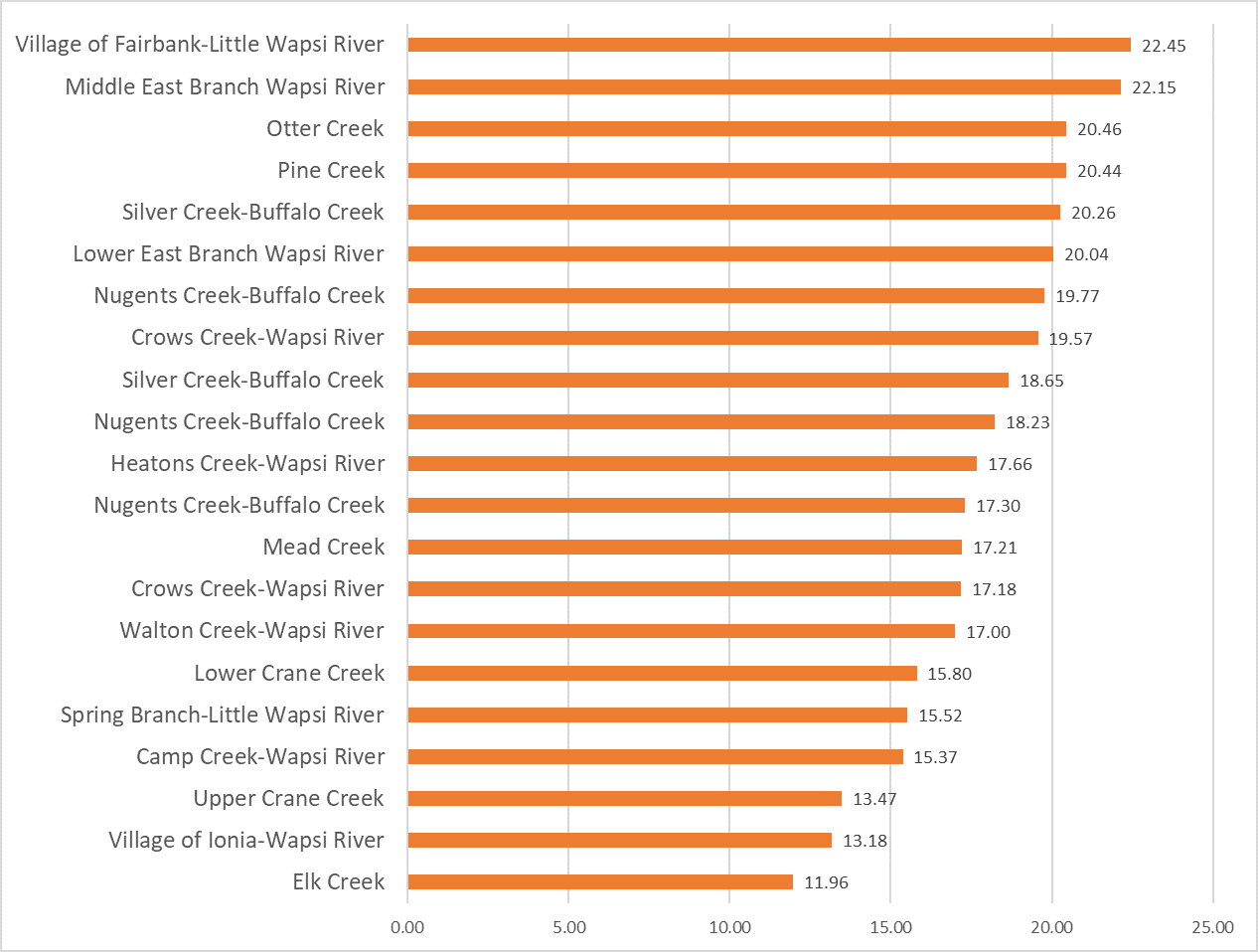
2016 Sulfate
(Mg/l)
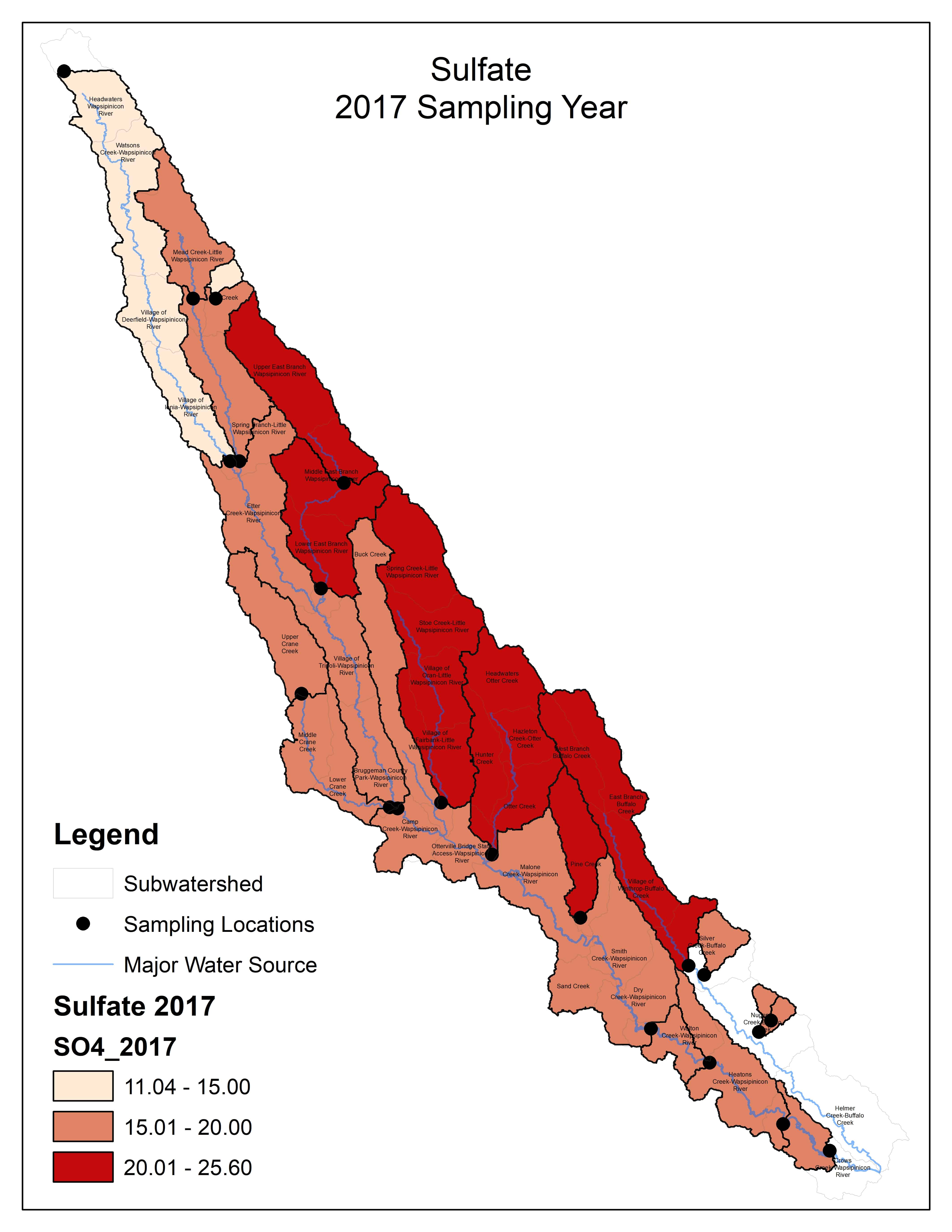
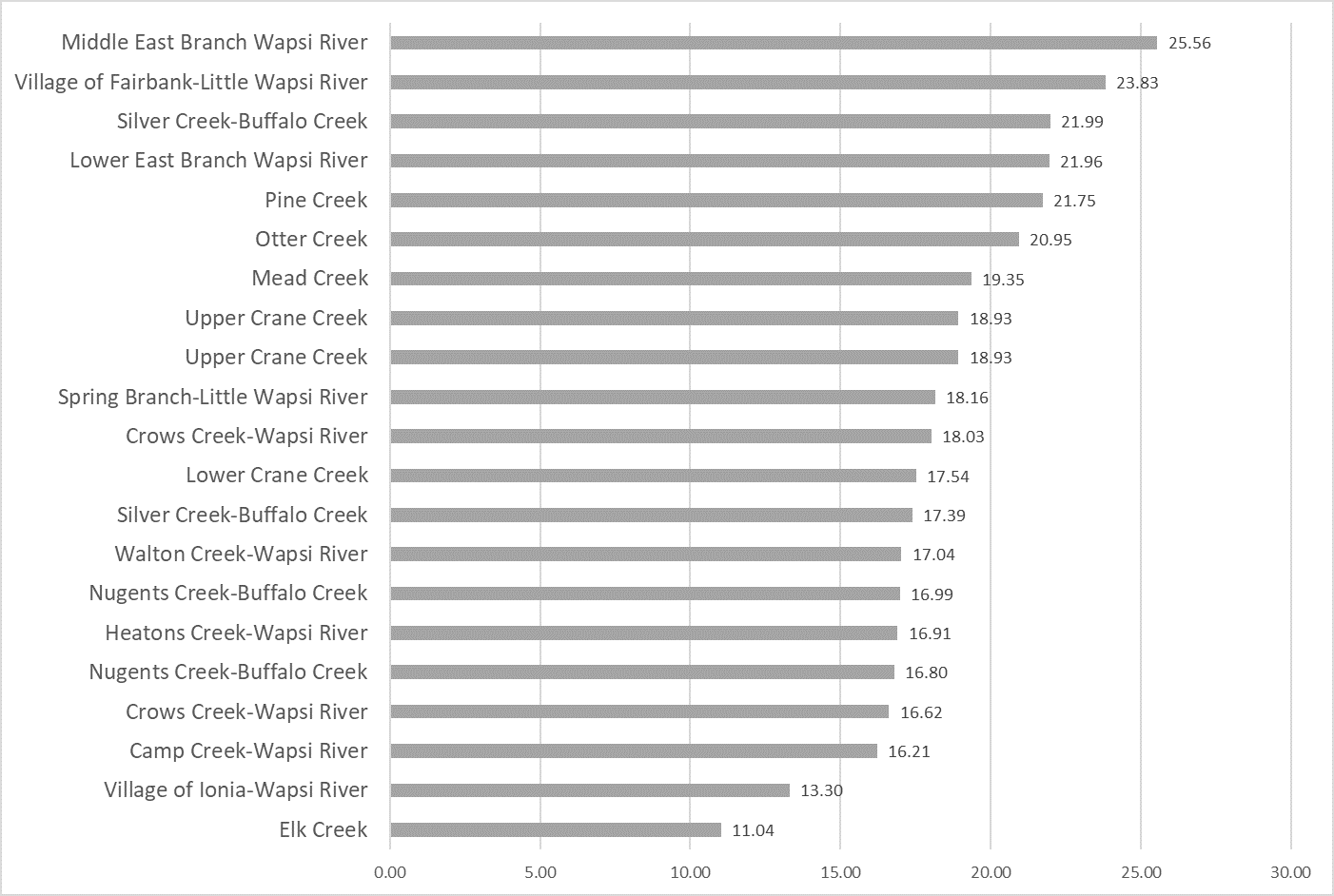
2017 Sulfate
(Mg/l)
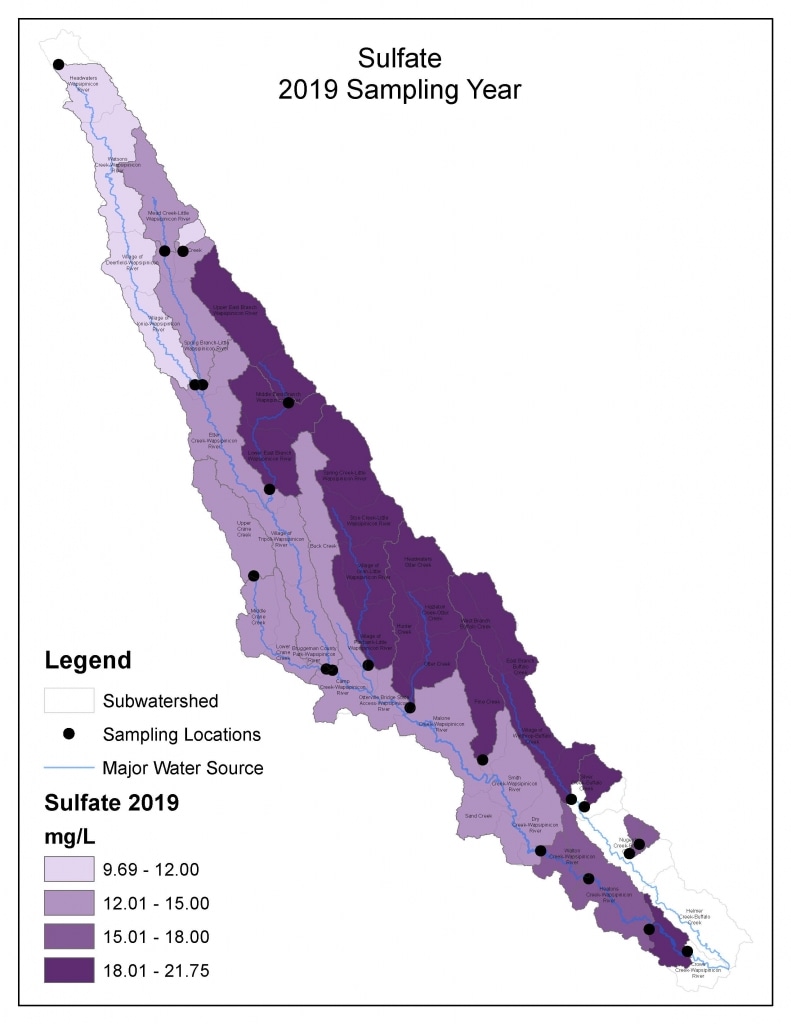 2019 Sulfate
(Mg/l)